
Myth 1: Sunscreen is Only Necessary on Sunny Days
Fact: UV rays can penetrate clouds, meaning your skin can be damaged even on cloudy or rainy days. UVA rays, which contribute to aging and long-term skin damage, are present year-round and can penetrate glass windows.
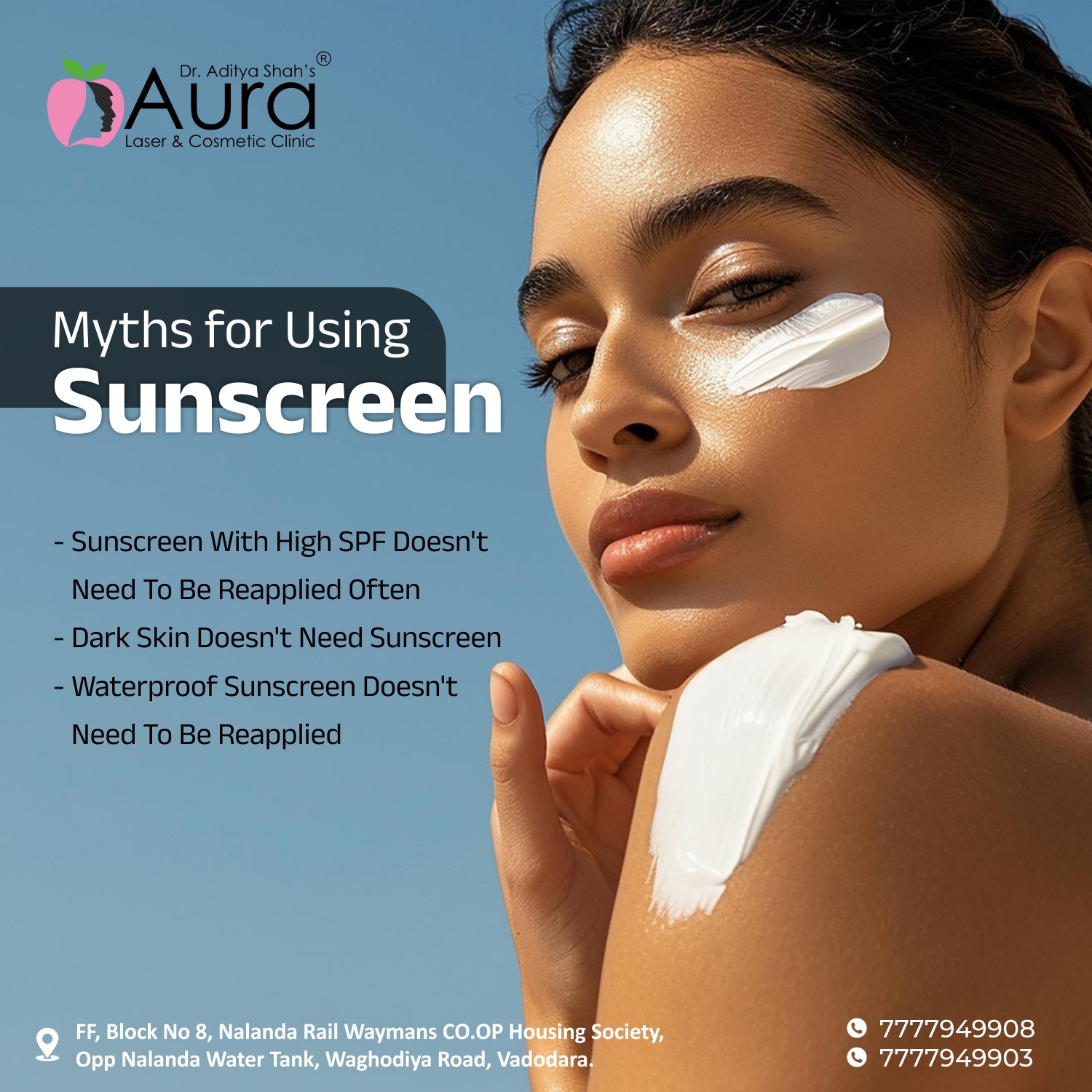
Myth 2: People with Darker Skin Don’t Need Sunscreen
Fact: While darker skin has more melanin, providing some natural protection against UV radiation, it does not make you immune to skin damage or skin cancer. Everyone, regardless of skin tone, should use sunscreen to protect against harmful UV rays.
Myth 3: One Application of Sunscreen Lasts All Day
Fact: Sunscreen needs to be reapplied every two hours, especially if you are swimming, sweating, or towel-drying. Even water-resistant sunscreens lose their effectiveness after a while.
Myth 4: Higher SPF Means You Don’t Need to Reapply as Often
Fact: Higher SPF sunscreens provide more protection but still need to be reapplied every two hours. No sunscreen offers 100% protection, and SPF 30 blocks about 97% of UVB rays, while SPF 50 blocks about 98%.
Myth 5: Sunscreen Causes Vitamin D Deficiency
Fact: Sunscreen does reduce the skin’s ability to produce vitamin D, but it does not completely block it. You can maintain healthy vitamin D levels through diet and supplements without risking skin damage from UV exposure.
Myth 6: Sunscreen Is Unnecessary Indoors
Fact: UVA rays can penetrate windows, meaning you can still be exposed to harmful UV radiation indoors. If you spend a lot of time near windows, it’s essential to use sunscreen to protect your skin.
Myth 7: Sunscreen Is Harmful Due to Chemicals
Fact: Sunscreens are rigorously tested for safety. There are also mineral sunscreens (like those with zinc oxide or titanium dioxide) available for those concerned about chemical ingredients. These mineral sunscreens are effective and gentle on the skin.
Myth 8: Sunscreen Is Only Needed on the Face
Fact: Any exposed skin can be damaged by UV radiation, not just the face. It's essential to apply sunscreen to all exposed areas, including the neck, ears, hands, and any other exposed skin.
Myth 9: Sunscreen Will Prevent Tanning
Fact: Sunscreen protects against harmful UV radiation but does not entirely prevent tanning. It helps minimize skin damage and reduces the risk of sunburn, premature aging, and skin cancer.
Myth 10: Sunscreen Is Only Necessary During the Summer
Fact: UV rays are present year-round. While UVB rays are stronger in the summer, UVA rays remain consistent throughout the year and contribute to skin aging and cancer risk. Sunscreen should be part of your daily skincare routine regardless of the season